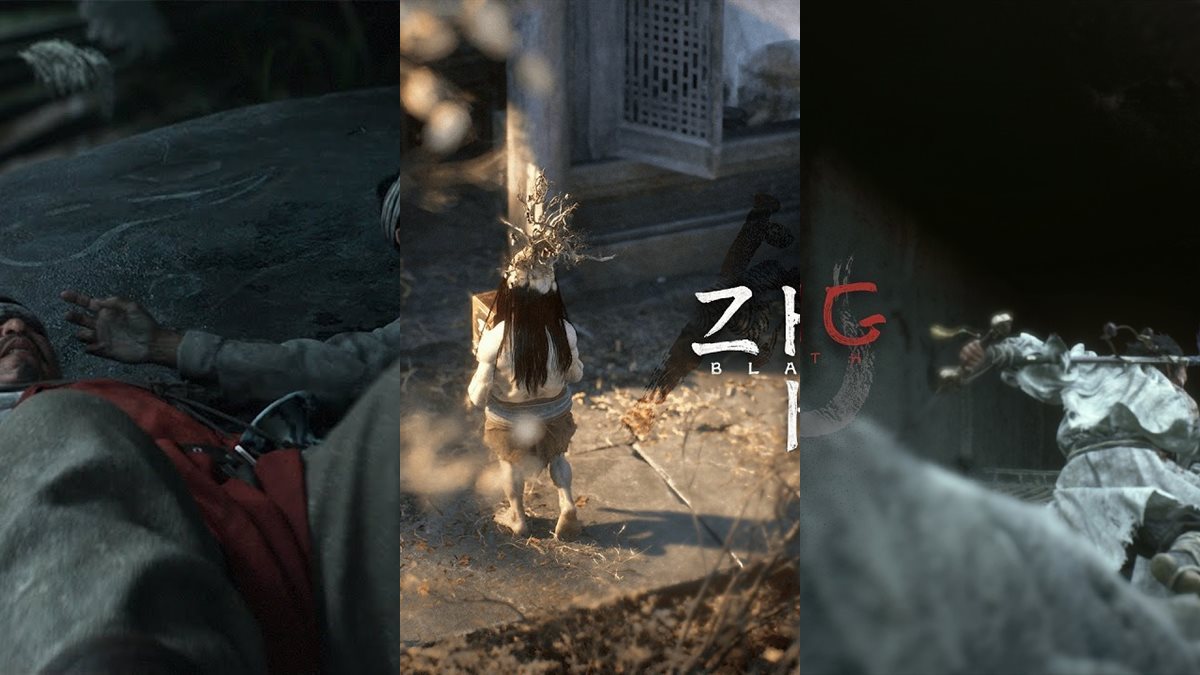
Black Myth: Zhong Kui Gameplay Deep Dive — Talismans, Ghosts and the Giant Clam
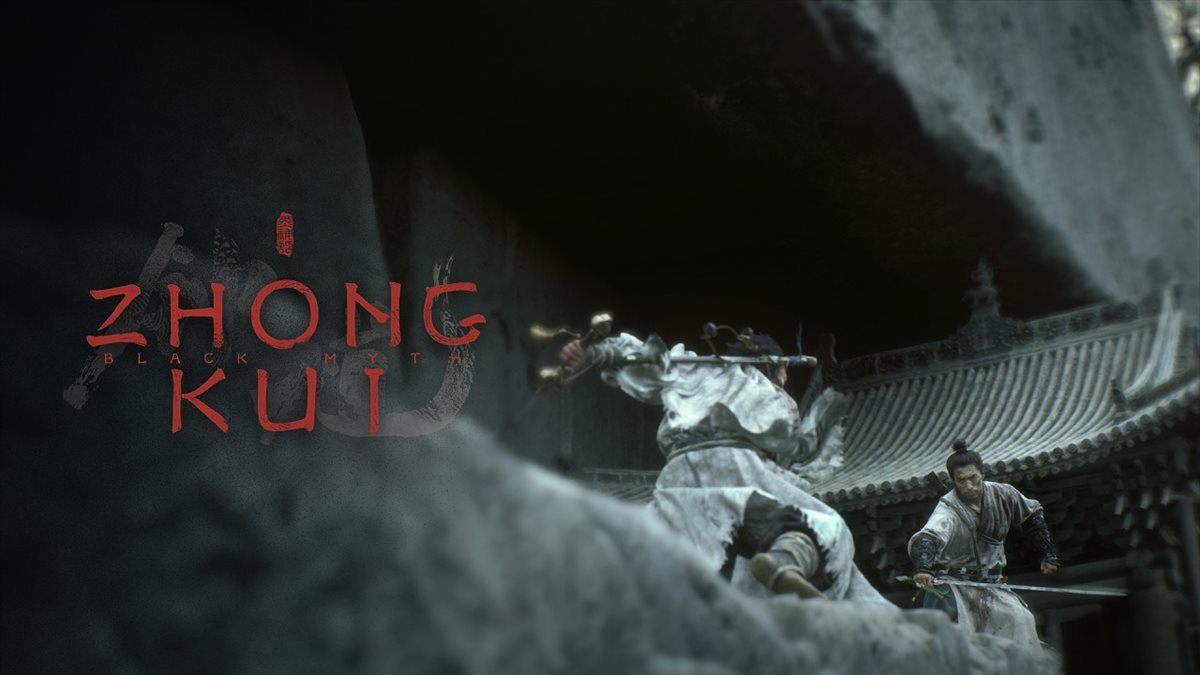
At 10:00 Beijing time on August 20, 2026 — exactly one year after the CG reveal, six years to the day after Black Myth: Wukong's own first demo — Game Science released the first-ever gameplay footage of Black Myth: Zhong Kui: 15 minutes and 53 seconds from an in-development build, showing real combat, a full boss fight, and story scenes. By early afternoon it had passed 2.7 million views on Bilibili alone, with over 95,000 people watching simultaneously. We pulled the official video apart scene by scene — below is what every minute actually contains, what it means, and what it deliberately doesn't tell us.
Official upload from Game Science's Black Myth channel. The video carries the studio's own disclaimer: recorded from an in-development build, rendered at 21:9, and “as the product is still in early R&D, final release content may differ.”
The 30-second version
- It's real gameplay, not another teaser. HUD, health bars, skill icons, hit reactions — one long unbroken take of exploration and fighting, plus a montage of other scenes. Art director Yang Qi says the demo contains “only one test map and a few unfinished story slices.”
- The staff is gone; the sword is in. Combat abandons Wukong's staff for jian (straight sword) play mixed with Taoist arts — paper talismans, spirit power, and a signature ghost-summoning system.
- You can fight alongside — and possibly inside — a summoned ghost. The demo's wildest mechanic: a tall, black-cloaked spirit joins the battle, and the boundary between summoning and possession is the biggest open question.
- The boss is a giant clam. “True Lord Giant Clam” anchors the back half — a multi-phase fight with shell-slam attacks and a getaway.
- No release date, still early days. Nothing in the video or the studio's statements moves the timeline — see our release date tracker for the full picture.
The chapter guide
Times below are approximate, measured on the official upload (15:53). The video ships without chapter markers; this is our roadmap for your second watch.
| 0:00 | Opening shot: a honeycombed rock in the mist, studio logo. The poem's narration begins. |
|---|---|
| 0:20 | Exploration begins — the white-robed swordsman wades through reed marshes, sword on his back. First look at the HUD-free traversal. |
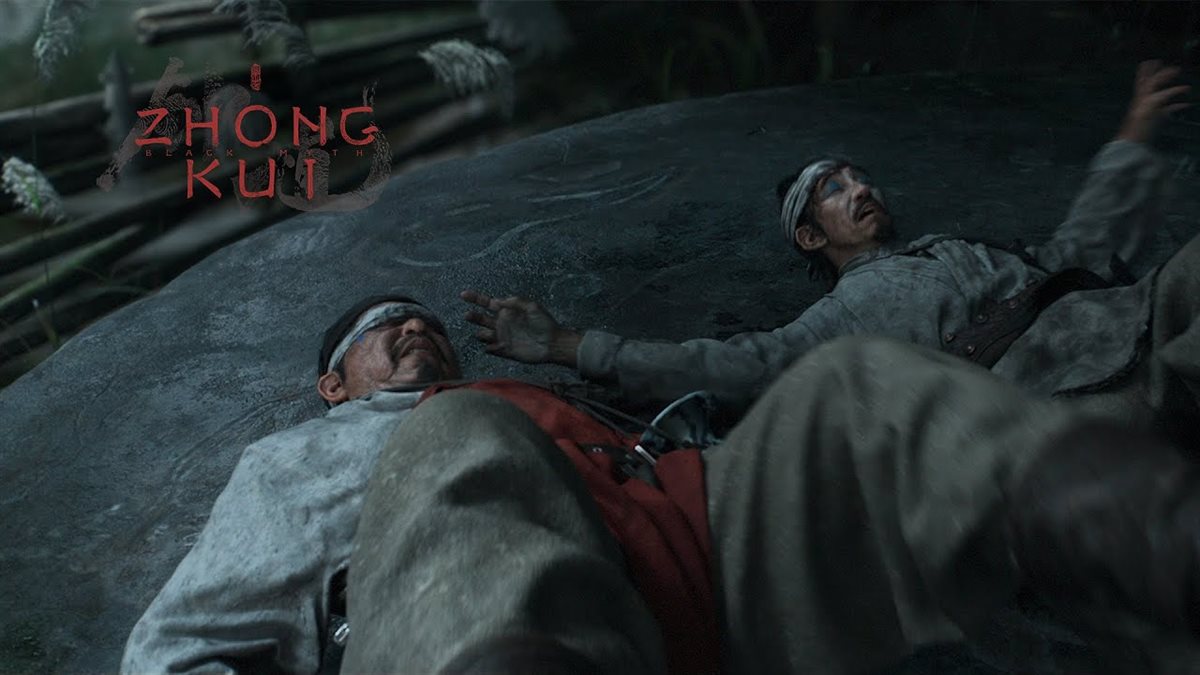
| 1:15 | Story cutscene: a wild, laughing old man on the shore. Per Chinese media, he later settles the swordsman and dissolves into a yellow paper talisman — the demo's thesis in one image. |
| 2:00 | A wave like a small tsunami swallows the scene; the swordsman washes ashore. |
| 2:35 | First combat: a ghost mob ambush in a muddy clearing. HUD appears — health and spirit bars bottom-left, skill bar bottom-right. |
| 5:00 | Elite enemies: club- and axe-wielding ghosts. Weapon clashes throw visible sparks — the parry/pressure language shows itself. |
| 6:20 | Talisman casting in combat: a fire seal blooms at the swordsman's hand. |
| 8:05 | The palette flips to underworld green: a vision of floating, falling figures — the drowned, the dead, or both. |
| 9:05 | Boss intro cutscene: True Lord Giant Clam reveals itself, barnacle-crusted shells and all. |
| 11:00 | Phase two: a tall, black-cloaked figure joins the fight at the player's side — the summon system in action. |
| 12:10 | The wounded boss flees; the pursuit leads into a cutscene (~13:15) where a pale woman rises from dark water. |
| 13:30 | Montage: courtyard duels, a funeral lantern, a steaming ghost kitchen, teahouse musicians, a night market of spirits, purple-lightning spellcasting, and a tiger-sized silhouette in the mountains. End card at 15:45. |
What the combat actually shows
Three systems carry the fighting, and each says something about what Game Science learned from Wukong.
1. Swordplay built on pressure, not just combos
The basic kit — light combos, dodge, block — will feel familiar to Wukong players, but the weapon identity is completely different: where the staff was about reach and flow, the sword play shown here is faster and more precise, built around deflections and counters. Chinese hands-on analyses describe a deliberate move away from Wukong's accumulate-and-spend “focus” loop toward active reading of the enemy — meeting attacks, breaking posture, pressing the opening, with spells woven into weapon strings rather than cast as separate buttons. The HUD still shows a point-based resource next to the health and spirit power bars, so some build-and-spend economy remains — but the texture of a fight is different: tighter, closer, more reactive.
2. Talismans — Taoist magic on paper slips
Woven between sword swings, the swordsman slaps paper talismans (符箓, fulu) onto the world: at around the 6:20 mark a fire seal flares from his hand mid-combo, and an area-of-effect talisman strike clears a pack of lesser ghosts in the opening fight. February's Chinese New Year short already teased talisman fire — the demo confirms it's a core combat verb, not a cutscene prop. Expect talismans to be Zhong Kui's answer to Wukong's spells: crowd control and elemental tricks layered over the melee.
3. The ghost-summon system
Here's the headline. In the boss fight's second phase, a tall, black-cloaked figure materializes and fights beside the swordsman — lingering long enough to appear in the execution framing. Chinese reports describe the system as commanding subdued ghosts, with some sequences reading as the protagonist fighting through the summoned spirit's moveset — a possession-like mechanic. Whether every capturable ghost grants a distinct body and moveset, or the possession beats are scripted, is the biggest unanswered mechanical question coming out of the demo. If it's the former, this is a full “catch and command ghosts” system — the Demon Queller's toolkit made playable, and a natural evolution of Wukong's transformation spells. The studio's own FAQ updated today to warn that “some of what we're exploring is still experimental.”
The skill icons may be real Taoist talisman parts
The demo's deepest rabbit hole so far comes from the Chinese community's image analysis: the three skill icons on the HUD's bottom-right bar appear to be reworked components of actual Taoist talisman calligraphy. One reads like a fire wheel; another resembles the “head” and “gall” structure of classical fu scripts; the third evokes cloud-seal script. A widely shared analysis (by the Bilibili creator Suoma, relayed by Gamersky) matched the fire-wheel icon against the huolun dakan fu — a “great fire wheel inquisition” talisman recorded in the Song-Yuan ritual compendium Daofa Huiyuan, where fire-wheel spirits are summoned to interrogate possessing demons and force them to give their names. Analysis
To be precise about what's proven: the icons are on screen; the resemblance is community image analysis; the fire-wheel talisman's demon-interrogation function is documented in the classical text. Whether Game Science actually dismantled real talismans for its UI is unconfirmed — but a fire wheel that forces demons to confess their names would be an almost too-perfect fit for a game about the ghost-catching judge. As of publication we've found no official word on the icons' origin.
Who you're actually playing
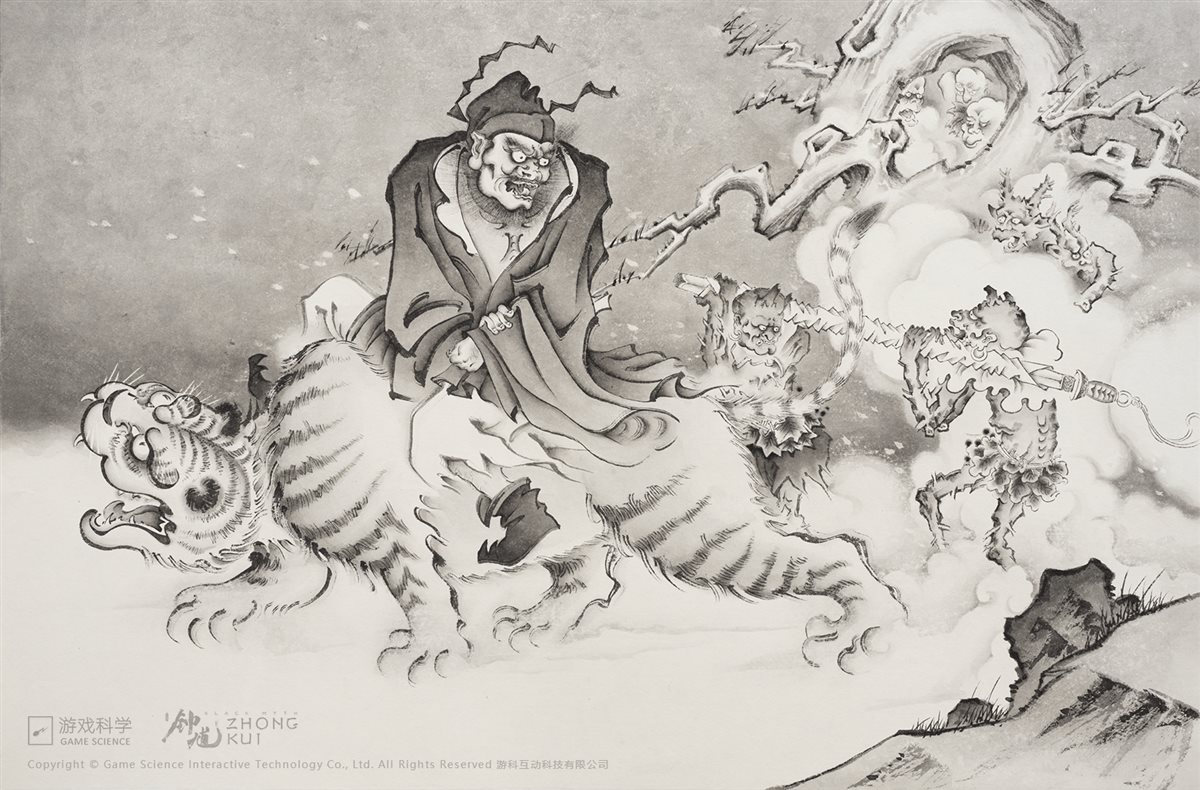
The player character is a white-robed Taoist swordsman — younger and leaner than the hulking, black-bearded Zhong Kui of the 2025 teaser, who appears here only in the closing montage astride his tiger. The studio has confirmed nothing about his identity; the community has three live theories, all speculation:
- A young Zhong Kui, before godhood. The most popular reading. Its physical evidence: both the swordsman and the teaser's tiger-riding Zhong Kui carry a similar-looking green scabbard — similar in color and silhouette, not provably the same weapon. Some also point to a mark on the swordsman's forehead, read against the legend versions where Zhong Kui dies dashing his head against the palace steps. Legend has competing accounts of that death — the earliest full record, Shen Kuo's Northern Song Dream Pool Essays, says only that he was a failed examinee, without the manner of death — so any scar reading is doubly speculative. Unconfirmed
- A vessel or agent of Zhong Kui. The swordsman's restrained, almost courteous fighting manner differs sharply from the teaser's feral Ghost King — enough that some analysts read him as a “destined one”-style avatar working on the Queller's behalf, the way Wukong's protagonist echoed the Monkey King. Unconfirmed
- Someone else entirely. The demo's cutscenes introduce a cast — the laughing old man, the pale woman in the water — whose identities are deliberately blurred. Game Science's FAQ update today admits that players' readings “have already gone far beyond the team's own understanding of the project,” which is either humility or delight at the theories. Official
The boss, and a possible thousand-year-old echo
The back half of the demo is one continuous boss fight against Dabang Zhenjun (大蚌真君) — “True Lord Giant Clam” — a hulking shellfish spirit that fights from between two building-sized shells: snapping, sweeping, charging, with windows that open when the shells part. Midway through, the player cracks the fight open into a faster second act; eventually the wounded creature flees, and the pursuit hands off to a cutscene where a pale woman surfaces from black water. Whether shell-breaking is systemic part-destruction or a scripted phase turn isn't clear from one fight — either way, it's the kind of mythological deep-cut boss design that made Wukong's bestiary famous.
One possible literary echo, surfaced by Chinese outlet Yystv and worth filing under “interesting, not proven”: the Northern Song anthology Taiping Guangji preserves an episode in which the Taoist master Xu Xun unmasks a shape-shifting shen — a creature associated with giant shellfish and mirages — that had taken human form and married a prefect's daughter; the master's talismans then save the wife, who had nearly transformed herself. Waters, a shellfish spirit, a human woman, talisman healing — the demo's boss, its mysterious woman, and its talisman combat sit oddly close to that skeleton. Two cautions, both important: older sources dispute what animal a shen even is, and Yystv itself explicitly framed its piece as riffing, not as a claim of adaptation. There is no evidence Game Science adapted this tale. Analysis
The poem, translated
The demo's narration is a poem, and it's doing real thematic work. Our translation from the original Chinese narration (no official English rendering has been published):
“Blood beneath the sword, dyed into fresh makeup — like an old friend, visiting in dreams. The past is gone, yet stubbornly unforgotten. The mortal world ages fast; the righteous road runs long; debts of love and hate defy a final chapter. Who says the road to the Yellow Springs is far? Good — let's walk it once more.”
The Yellow Springs (黄泉) — literally “yellow springs,” the underworld — is one of the oldest names for the Chinese land of the dead, attested as far back as the Zuo Zhuan. Between that destination, the ghost-marsh setting, and the official tagline “are there really ghosts in this world? Demons are born from the human heart,” the thematic spine is clear: a game about the border between the living and the dead, and who gets to judge what crosses it. Read the full legend behind that in our Zhong Kui explainer. Asked about spoilers today, Game Science CEO Feng Ji laughed on Weibo (Chinese) that he can't spoil anything “because there's basically no story yet” — a joke, but one consistent with the studio's “early development” messaging.
The five things Game Science promised to fix
Alongside the demo, art director Yang Qi posted a long Weibo essay (Chinese) laying out five axes of improvement over Wukong — as close to a design manifesto as this studio gets:
- Do overcast skies properly. Wukong leaned on golden-hour grading to mask global-illumination and exposure weaknesses; Zhong Kui's gloom has to hold up on its own — and the demo's grey marsh is exactly that test, played out on screen.
- Believable combat feedback. Brute-force mocap volume and dense animation transitions so hits feel physical, not staged — Yang Qi notes animators were quietly booking extra mocap sessions, and the data still wasn't finished when the demo locked. The weapon-clash sparks around the 5:00 mark are the visible tip of that work.
- Grounded design. No eye-candy-only ideas — his admission that the team “strayed for a long time” on this during Wukong is remarkably candid.
- De-stage the storytelling. Fewer characters standing around delivering lines like a stage play; more blocking, more motion. The old-man scene — all movement, business, and weather — plays like a direct answer.
- Kill the invisible walls. Wukong's single most-criticized flaw, named outright. Fixing it means reworking collision, level reachability, and animation — “we're working to break through.”
He also described Zhong Kui's character as a triple imagination of gods-and-demons, xianxia, and wuxia, with a temperament of “unconstrained ease” — both “a dust-covered, quiet kind of ease” and “a rage that acts without counting the cost.” That's a personality brief for a protagonist, not just a mood board.
How it stacks up against Wukong's first demo
The comparison writes itself. Wukong's 2020 debut was a polished vertical slice from a project deep into production; Zhong Kui's first gameplay arrives earlier in its lifecycle, wears its work-in-progress label openly, and still managed to break Bilibili. The demo runs on Unreal Engine 5 — confirmed by Unreal Engine's official account, which co-published the video on Bilibili (Chinese). A July interview with the studio sketched the shape: lots of boss fights, a core theme of life and death, a more direct narrative than Wukong, and at least one trailer a year. Today's demo matches that blueprint beat for beat.
For balance: not everyone is sold. Alongside the awe at the art fidelity, Chinese comment sections also carried a strand of “this looks too much like Wukong's assets reused” — a minority view, but a real one, and worth watching as more footage arrives. What's confirmedly different so far: the sword replacing the staff, talismans, ghost-summoning, a fleeing multi-phase boss, and a swamp of ghost-human ambiguity instead of Wukong's celestial grandeur. What's confirmedly the same: single-player action RPG, buy-to-play, PC plus mainstream consoles, and a release date of “not yet” — tracked on our release date page.
What the demo still doesn't answer
- Who the swordsman is. Young Zhong Kui, vessel, or stranger — officially wide open.
- How deep the ghost system goes. One scripted companion, or a catch-and-collect roster with distinct bodies? The demo can't say.
- How much of the world exists. Yang Qi: one test map and a few unfinished story slices. The montage shows villages, markets, duels and kitchens — whether they share one map is unknown.
- When it's out. Nothing today moves the needle — the tracker stands.
All eyes now turn to gamescom, where Opening Night Live runs August 25 — Game Science used that exact stage to reveal the game last year, though nothing about an appearance is confirmed. Every official video so far is on our trailers page, and this piece will be updated as new findings are verified.
Update log — August 20, 2026: published with the demo's release; expanded the same day with a verified chapter guide (timestamps measured on the official upload), the talisman-icon analysis, protagonist theories, and the Taiping Guangji parallel. Community theories are labeled as such.
Sources & further reading
- Black Myth: Zhong Kui official page & FAQ — Game Science, updated Aug 20, 2026. Platforms, buy-to-play model, early-development status, and the “player interpretations” note.
- Official gameplay demo video — Black Myth on YouTube, Aug 20, 2026. The 15:53 demo this article analyzes.
- Official Bilibili upload (Chinese) — Game Science, Aug 20, 2026. View/like statistics; the version measured for the chapter guide.
- Demo breakdown (Chinese) — Gamersky, Aug 20, 2026. Boss name, summon/possession observations, UI reading.
- Demo flow report (Chinese) — 17173, Aug 20, 2026. Opening sequence, the old man dissolving into a talisman, the fleeing boss and the woman in the water.
- Combat system analysis (Chinese) — Jinghe via NetEase, Aug 20, 2026. The shift from focus-loop to active deflection; spells woven into strings.
- Skill-icon talisman analysis (Chinese) — Gamersky relaying Suoma's image comparison, Aug 20, 2026. Community analysis, not a developer statement.
- Daofa Huiyuan, juan 124 (Chinese classical text) — Chinese Text Project. The “great fire wheel inquisition” talisman tradition.
- The Shenlang parallel (Chinese) — Yystv, Aug 20, 2026. Explicitly framed by its author as riffing, not adaptation claims.
- Yang Qi's five improvement axes (Chinese) — via NetEase, Aug 20, 2026; original post on his Weibo.
- Feng Ji's ten work principles (Chinese) — IT之家, Aug 20, 2026. Plus the “no story to spoil” remark.
- Demo-day roundup (Chinese) — 36kr via NetEase, Aug 20, 2026. View counts, July 2026 studio interview context.
- Community reaction roundup (Chinese) — Gamersky, Aug 20, 2026. Hot-search data and sentiment.
- Zuo Zhuan, Yin Gong year 1 (Chinese classical text) — Chinese Text Project. Earliest attestation of “Yellow Springs.”