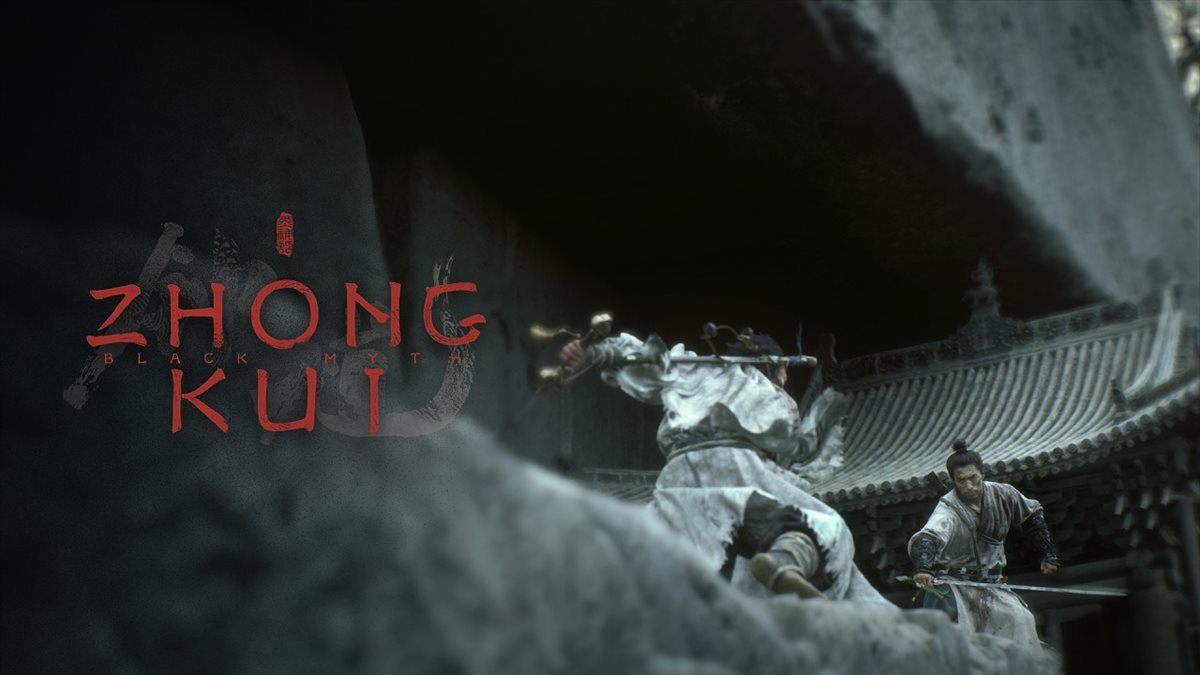
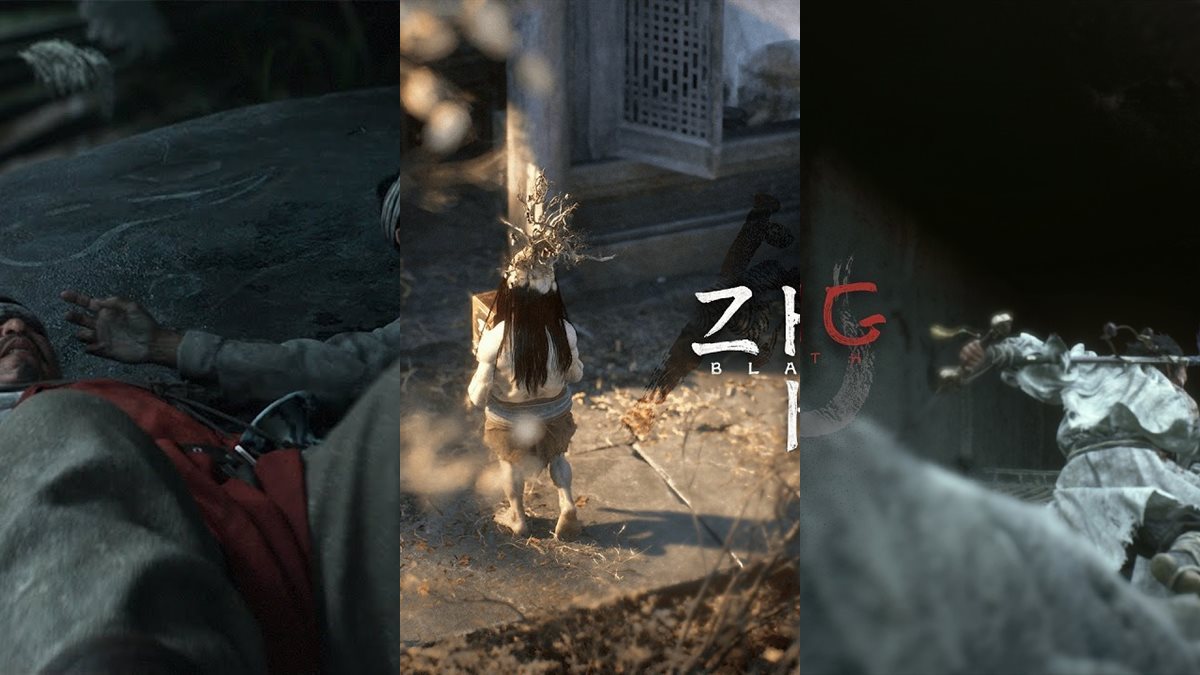
Who Is Zhong Kui? The Ghost King Behind Black Myth: Zhong Kui
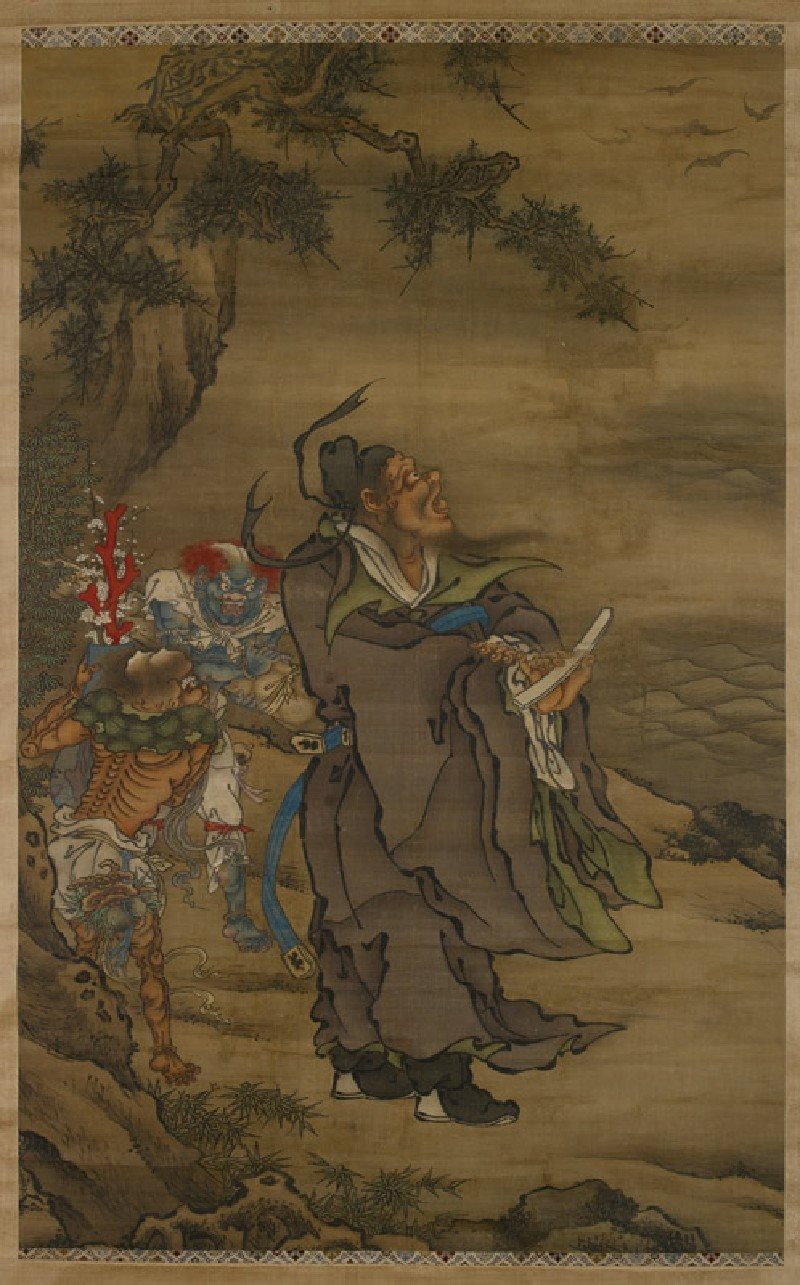
The man on the key art is not a monkey
When Game Science revealed Black Myth: Zhong Kui at gamescom Opening Night Live in August 2025, a lot of Western coverage had the same question under the headlines: who is Zhong Kui? Black Myth: Wukong traded on one of the most famous characters on Earth — the Monkey King has been endlessly adapted, from the 16th-century novel Journey to the West to Dragon Ball. Zhong Kui is different: enormous inside Chinese culture, almost unknown outside it. That gap is exactly what this explainer is for.
Short version: Zhong Kui (钟馗) is Chinese folklore's great ghost-hunter — a wronged scholar who died in disgrace and was reborn in the afterlife as the Demon Queller, the fierce god who catches and eats ghosts. He has been a fixture of Chinese painting, opera, and New Year prints for over a thousand years. If Black Myth: Wukong was about a rebel who defied Heaven, Black Myth: Zhong Kui looks set to be about the man Heaven wronged — and what he became in the dark.
The legend: the scholar the empire threw away
The core story, as it has been told since at least the Tang dynasty (618–907), goes like this. Zhong Kui was a brilliant scholar from the Zhongnan Mountains who traveled to the capital for the imperial examination — the brutally competitive test that decided who got to serve the empire. He earned top honors. But when the court saw his face, they stripped him of the title: Zhong Kui was, in the telling, hideously ugly, and the emperor's officials could not stomach giving the empire's highest academic honor to a monster-looking man.
Destroyed by the injustice, Zhong Kui threw himself against the palace gates and died on the steps of the institution that had judged his face instead of his mind. The emperor, regretting the waste, had him buried with honors, wrapped in an official's robe.
That is only the first half. The legend's most famous chapter comes decades later, under Emperor Xuanzong. The emperor lay sick with a fever and dreamed of a small demon sneaking through the palace, stealing his jade flute and his consort's perfume sachet. Then a giant of a ghost burst in — bearded, wild-eyed, dressed in the robe of an imperial official — who seized the little demon, gouged out its eyes, and ate it. The giant introduced himself: Zhong Kui, the scholar the court rejected, swearing from beyond death to rid the empire of demons. Xuanzong woke cured, and summoned the great court painter Wu Daozi to paint the figure from his dream. That painting is gone now, but it made Zhong Kui's face — the bulging eyes, the spade beard, the official's hat — one of the most recognizable images in Chinese art.
The Demon Queller in Chinese culture
For the next twelve centuries Zhong Kui became the ghost you hang on your wall to scare the other ghosts away:
- Protector of the home. His portrait was pasted on doors and main halls like a one-man security system — particularly around the Dragon Boat Festival in many regions, when households drove out pestilence and evil spirits. Where door gods stand guard politely, Zhong Kui actively hunts.
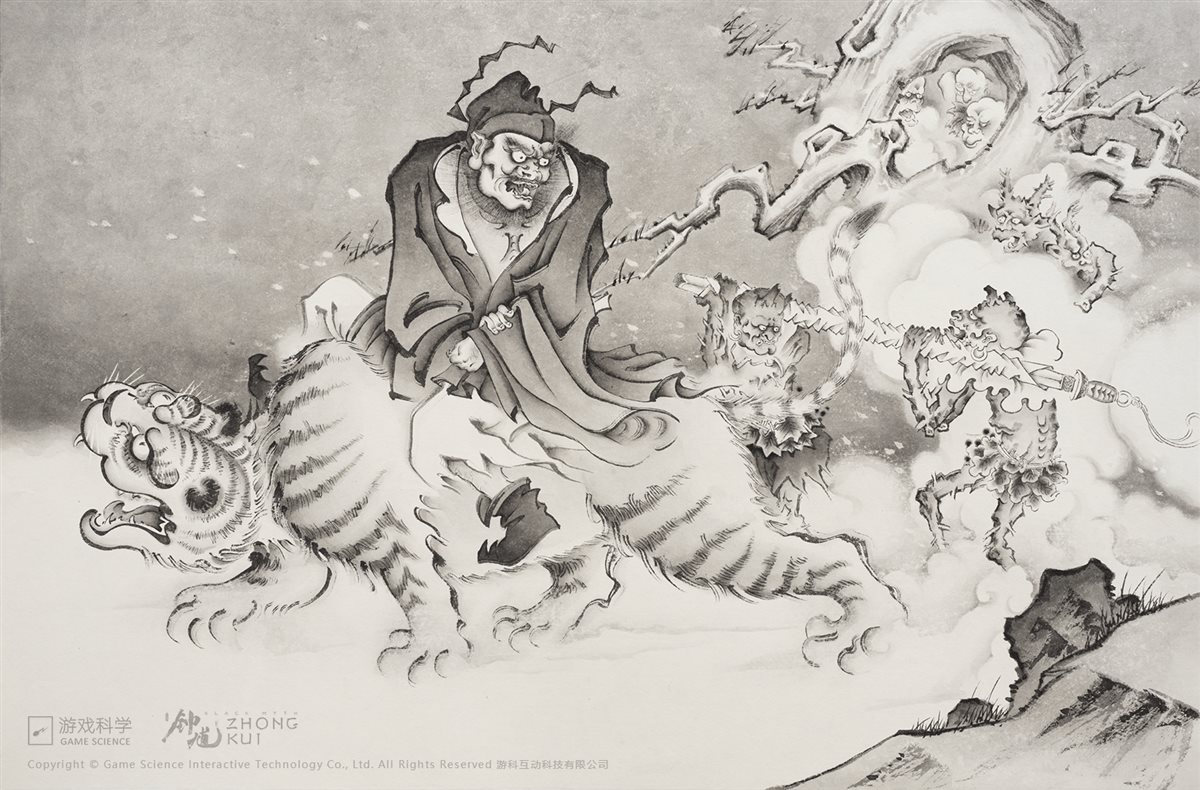
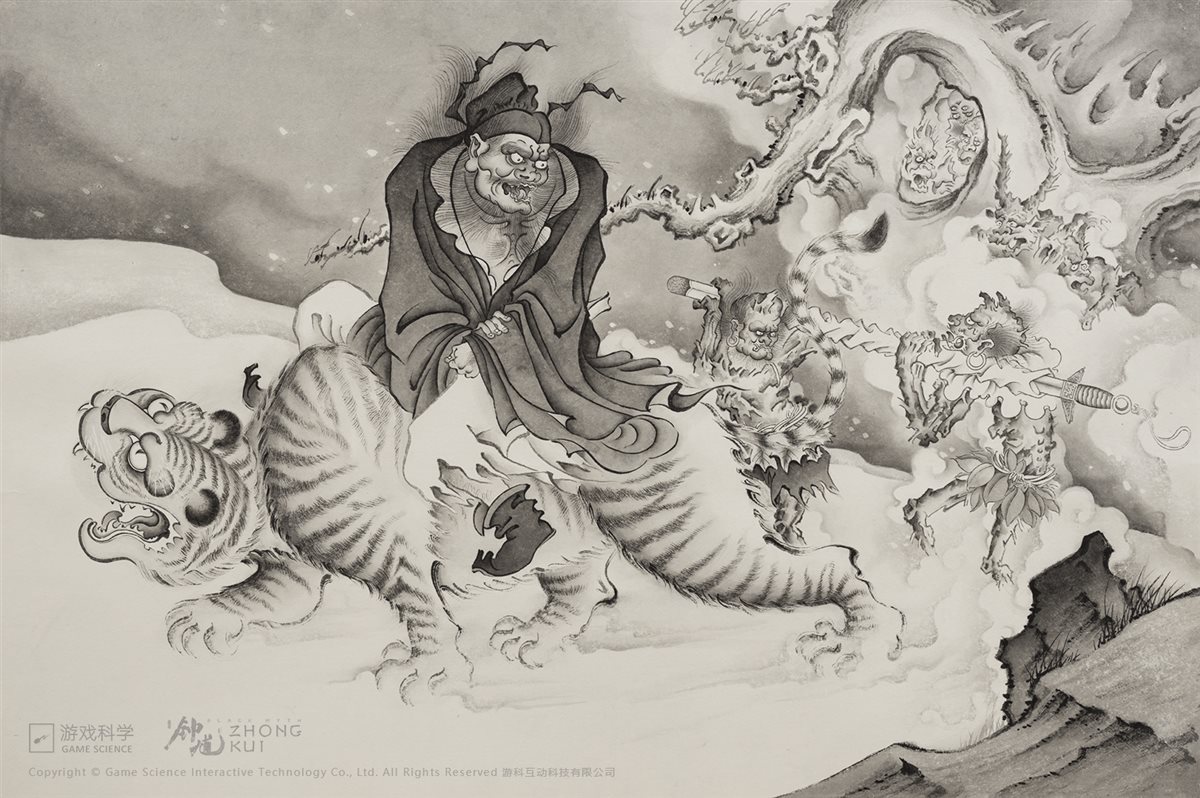
- An art-historical genre of his own. Virtually every major Chinese painter took a turn at him — drunk Zhong Kui, Zhong Kui on a donkey in the snow, Zhong Kui with the five bats (a pun: bat, fú, sounds like blessing; Oxford's Ashmolean Museum holds a Ming-dynasty version attributed to Wu Wei). The genre's landmarks include Dai Jin's Ming-dynasty handscroll Night Excursion of Zhong Kui (Chinese), now in Beijing's Palace Museum. Game Science has said the game's key art draws on a Ming-dynasty painting of Zhong Kui riding a tiger, alongside a dream of one of the studio's own founders — which is why the reveal art shows him mounted on a massive striped beast.
- Opera and folklore spinoffs. He has a sister, a loyal friend named Du Ping who buried him, and a whole beloved set-piece, “Zhong Kui Marries Off His Sister,” where the ghost king returns to the world of the living in procession. He is terrifying and oddly tender at the same time — a monster whose entire job is protecting people.
Why Game Science picked him
Nothing official explains the choice in so many words, but the shape of it is not hard to see, and Chinese commentators reached the same reading within hours of the reveal. Three things make Zhong Kui a natural Black Myth protagonist:
- He is a ghost story engine. Wukong fought gods and demons of the celestial order; Zhong Kui's whole domain is the dead. A game about the Demon Queller gets to crawl through the Chinese underworld — the Yellow Springs, hungry ghosts, the bureaucracy of the afterlife — which is a bottomless bestiary for boss design.
- He carries the series' theme. Black Myth's worlds run on unfair heavens and wronged souls. Zhong Kui is the purest distillation of that theme in the whole canon: a man destroyed by an unjust system who came back as something the system should fear. He judged the judges.
- He is visually fearless. Wukong was handsome. Zhong Kui is supposed to be ugly — a lumbering, bearded, tiger-riding terror of a hero. Choosing him is a statement: this series is not chasing pretty protagonists, it is chasing myth.
The narration in the first gameplay demo leans straight into the underworld material — the game's official site carries the poem line “who says the road to the Yellow Springs is far?” as its English tagline — which suggests the game means to spend real time in his domain. For everything the footage shows, see our frame-by-frame gameplay breakdown.
The name, pronounced
Zhong Kui is written 钟馗 and pronounced roughly “joong kway” ( /ʒʊŋ kʷweɪ/, if you read IPA). You will also see older spellings like “Chung Kuei” in English books — same person. He goes by titles like the Demon Queller, the Ghost King, and King of Ghosts; in Taiwan he is affectionately worshipped as the Exorcist of Ghosts. Any of them refers to the same bearded scholar with a sword.
What this means for the game
Game Science has confirmed only the broad strokes: Black Myth: Zhong Kui is a single-player action RPG built around the Zhong Kui legend, buy-to-play, headed to PC and mainstream consoles, with no release date yet — our release date tracker follows every official signal. But if Wukong taught us anything, it is that this studio adapts folklore with a scholar's care and a showman's eye. Wukong sent players scrambling to read Journey to the West. Don't be surprised when the world's bookshops run out of Zhong Kui next.
Every official video released so far is collected on our trailers page.
The many faces of the Demon Queller
Three images spanning five centuries — a Ming painting, and Game Science’s own concept art.
Sources & further reading
- Zhong Kui the Demon Queller with Five Bats, attributed to Wu Wei (Ming dynasty) — Ashmolean Museum, University of Oxford, accessed August 2026. Object page for the painting cited in the five-bats bullet; it is also this article's header image.
- Dai Jin, Night Excursion of Zhong Kui (Ming dynasty), Palace Museum collection page (Chinese) — The Palace Museum, Beijing, accessed August 2026. Supports the handscroll cited in the art-historical genre bullet.
- Taiping Guangji, juan 469, Chinese Text Project — Chinese Text Project, accessed August 2026. Tang anthology tales of spirits in human form; background on the strange-tales tradition behind the folklore discussed above.
- Zhong Kui — Wikipedia, accessed August 2026. General overview of the legend, the Xuanzong dream, and the Demon Queller's place in Chinese art.
- Black Myth: Zhong Kui, official site — Game Science, accessed August 2026. Source of the official English tagline quoted above.